What is kava?
Kava is a remarkable plant from the South Pacific — botanically fascinating, culturally significant across Oceania for thousands of years, and the source of some of the most distinctive natural pigments and aromatic compounds found in any tropical plant.
In the European Union, kava is available for non-food applications including natural textile dyeing and aromatherapy. Explore the sections below to learn more about the plant, its history, and its chemistry.
Kava belongs to the pepper family Piperaceae — making it a distant relative of the black pepper in your kitchen.
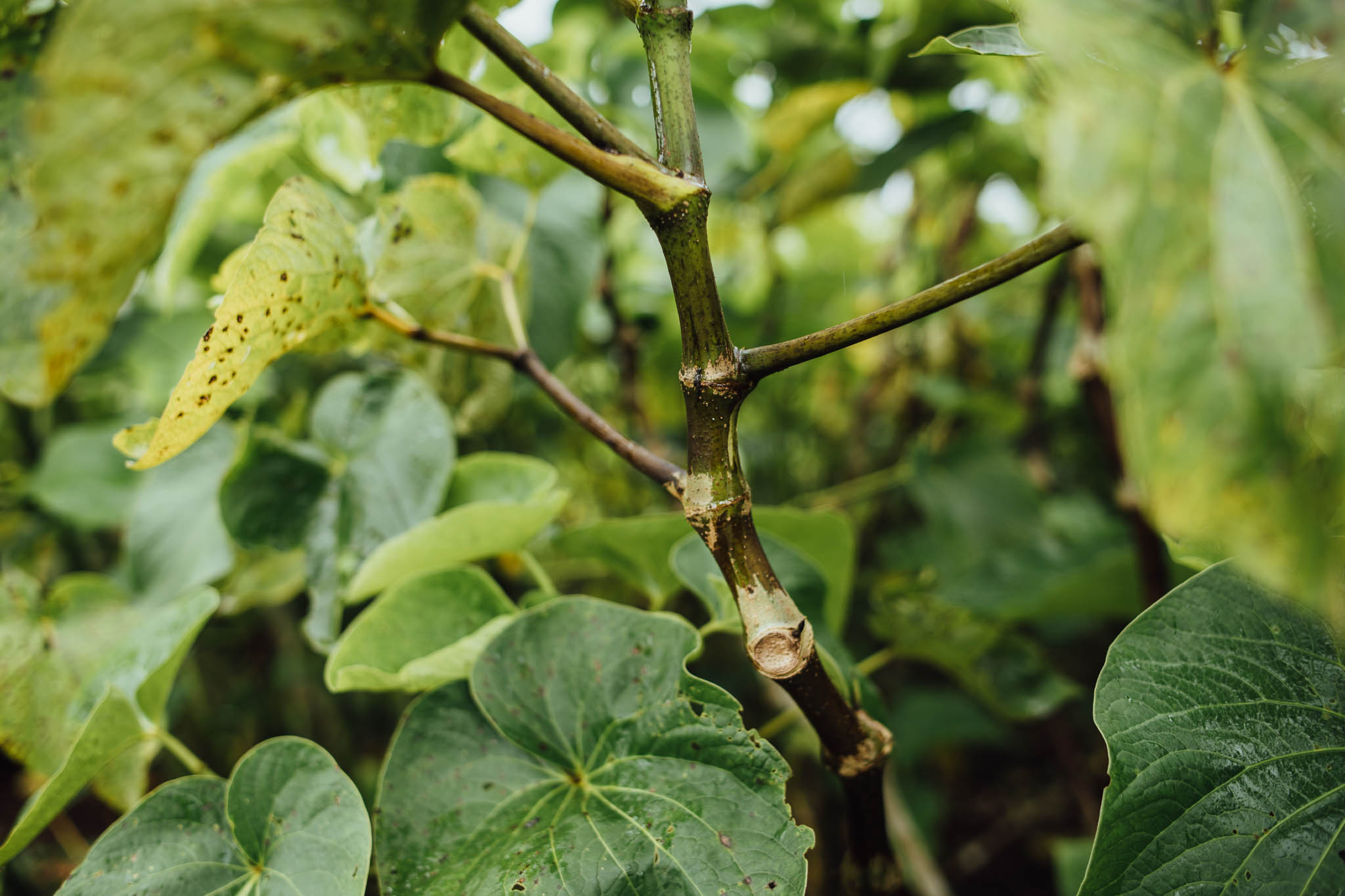
The plant grows as an attractive shrub reaching over three metres in height, with broad, heart-shaped leaves and thick, jointed stems. It thrives in the rich volcanic soils of islands like Vanuatu, where warm temperatures, high humidity, and clean mountain water create ideal growing conditions. Kava is a slow grower — quality roots require at least three to five years in the ground before harvest, with experienced farmers often leaving plants longer to develop greater root mass.
It is the underground portion — the roots and rootstock — that are the valuable part of the plant. The rootstock can develop into a substantial mass through traditional soil-mounding techniques, and it is here that the plant’s unique phytochemicals concentrate. The above-ground parts of the plant are not used.
One of kava’s most remarkable botanical features is that it is completely sterile — it cannot reproduce on its own. Every kava plant must be propagated by human hands, through stem cuttings. This means that every noble cultivar in the world today is a direct genetic clone of an ancient original, maintained through generations of careful Pacific Island farming. It is, in a very real sense, a living botanical archive.
Kava’s story begins in Vanuatu, an archipelago of over 80 islands in the South Pacific, where researchers believe the plant was first domesticated from a wild ancestor around 3,000 years ago. According to the research of botanist Dr Vincent Lebot — one of the world’s foremost authorities on the plant — early Pacific farmers encountered a natural mutation that produced more desirable characteristics than the wild species. Despite being harder to propagate, they preserved it carefully, passing cuttings from generation to generation.
From Vanuatu, kava cultivation spread across the Pacific over centuries — to Fiji, Tonga, Samoa, Hawaii, and beyond — carried by voyaging peoples as one of their most prized cultivated plants. Each island group developed its own varieties, preparation traditions, and cultural customs around it. Kava became woven into the social fabric of Pacific life: present at important gatherings, at the marking of significant occasions, and as a symbol of welcome and peaceful exchange.
Vanuatu remains the heartland of kava culture today. The country has more kava cultivars than anywhere else in the world, and kava plays a central role in everyday social life. It is also where the world’s finest kava is grown — including the kava that Kava Europe sources exclusively through The Kava Society (New Zealand), whose Vanuatu partners have spent over a decade developing processing methods that preserve the authentic character of freshly harvested roots.
The roots of the kava plant contain a family of unique natural compounds called kavalactones — found nowhere else in the plant kingdom. Different cultivars produce distinct kavalactone profiles, known as the cultivar’s chemotype, expressed as a six-digit number ranking the major kavalactones in order of concentration. This chemical fingerprint gives each variety its own characteristic colour, aroma, and pigment properties.
Not all kava is equal. Over centuries of cultivation, Pacific Island farmers selected the most desirable kava varieties — those with favourable chemotypes and clean, consistent character. These carefully preserved varieties are known as noble cultivars. They represent the pinnacle of traditional kava cultivation, and are the only varieties considered suitable for use. Vanuatu’s Kava Act (2002) legally restricts kava exports to noble cultivars only, protecting the country’s reputation for quality.
By contrast, so-called “two-day” or non-noble kava varieties — which were never traditionally used for everyday purposes — have undesirable chemotypes and have caused quality issues in global markets. All kava available through Kava Europe is sourced exclusively from certified noble cultivars, grown in regions optimal for each variety, and verified through laboratory chemotype analysis.
The kavalactone content of the roots also determines the vibrancy of the natural pigments they produce — directly relevant for textile dyeing applications. Fresh-processed noble kava retains a distinctly richer colour profile than poorly dried or non-noble alternatives: ranging from pale gold through warm caramel to deep chocolate-brown, depending on the cultivar and its chemotype.
In the European Union, kava is currently permitted for non-food applications. Kava Europe operates fully within these regulations, offering kava for permitted uses including natural textile dyeing and aromatherapy.
For textile dyeing, kava’s natural phytochemicals produce a distinctive range of organic pigments — from pale gold and tropical beige through to rich caramel and warm brown tones — that vary by cultivar, concentration, and preparation method. The colours are entirely plant-derived and free from synthetic additives. For aromatherapy applications, kava’s characteristic aromatic profile — clean, nutty, sometimes spiced or faintly sweet depending on the cultivar — makes it a distinctive and high-quality botanical product.
We are committed to providing thorough, accurate information about this remarkable plant. For those who want to go deeper into kava’s botany, history, cultivation, and chemistry, The Kava Society (kavasociety.nz) — the New Zealand producer whose kava we exclusively distribute in Europe — maintains one of the most comprehensive English-language resources on the plant, covering everything from cultivar profiles and chemotype science to processing standards and full certificates of analysis.